The biggest obstacle to improving your singing

Voice Training

After years of teaching, I keep seeing the same overlooked mistake — even among experienced singers.

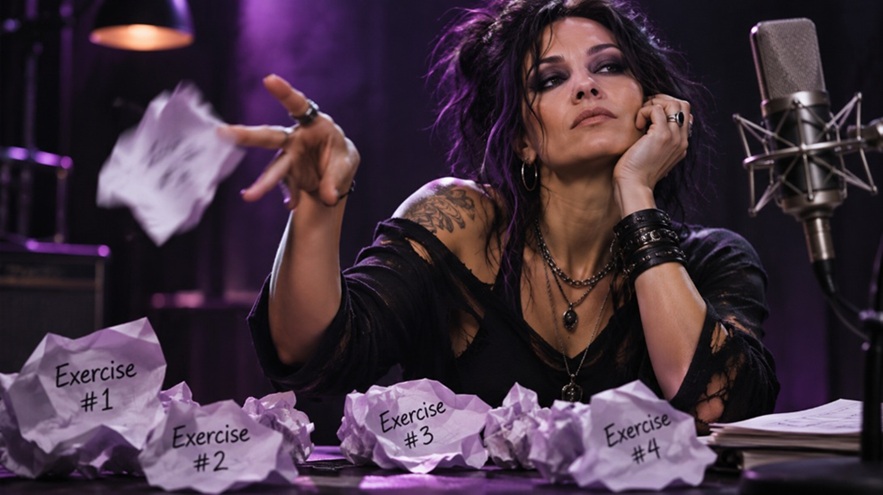
Singer in a recording studio discarding vocal exercise sheets before giving them a chance

After many years of teaching, I often find myself coming back to the same observation.

Many singers come up with the most far-fetched explanations for why they're not progressing. They think their training isn't working, that there must be some secret technique they haven't discovered yet, and they keep searching for the Holy Grail somewhere in the depths of the internet.

But the main cause I keep seeing is always the same, and it's incredibly underestimated: expecting to get every exercise right almost immediately, and assuming that if it doesn't work, it's better to try something else.

I've even had students ask me to change an exercise after trying it just twice, during their very first lesson, when you'd expect them to be at their most eager to learn!

I understand the logic. If you think vocal exercises are interchangeable, why insist on one that feels difficult? Why not simply find one that feels comfortable instead?

And it's even worse when teachers reinforce this idea by giving everyone the same standard vocal exercises and moving on to something else whenever one doesn't work.

Of course, different exercises can target the same coordination, and sometimes changing the approach can be a good choice, but there must be specific pedagogical reasons for that choice, and simply switching exercises at random without first working on them consistently certainly isn't one of them.

Clearly, we're not talking about warm-ups, which by definition are meant to prepare the vocal instrument. We're talking about exercises designed to develop new vocal coordinations to reach a particular goal.

In this case, it's not only normal, but actually desirable that you can't do them right away, because repeating what you already know how to do clearly won't teach you something new.

In fact, you should be frustrated with a teacher who never asks you to do something you can't yet do. Who never challenges you to go beyond your current abilities.

Also, struggling with a vocal exercise says absolutely nothing about how good a singer you are.

This is often the hardest part to accept, especially for experienced singers. They associate not being able to perform an exercise immediately with a judgment on their singing ability, which gives them a completely distorted picture of their abilities.

I've worked with extraordinary singers who struggled enormously with exercises that much less skilled singers found almost trivial.

The voice is incredibly complex. We all have different characteristics, different strengths and different coordinations to develop. There's always something new to explore.

But if you're unwilling to do that work because you can't put aside your judgment of yourself, if you can't give yourself permission to get things wrong in order to learn, you've built a wall that stands between you and your progress.

Remember: you cannot learn something new by continuing to do only what you already know how to do.
Svenska

Det största hindret för att utvecklas som sångare

Efter många år som sångpedagog ser jag samma förbisedda misstag om och om igen — även hos erfarna sångare.

Efter många års erfarenhet av att undervisa återkommer jag ofta till samma iakttagelse.

Många sångare kommer med de mest långsökta förklaringarna till varför de inte utvecklas. De tror att deras träning inte fungerar, att det måste finnas någon hemlig teknik som de ännu inte har upptäckt, och de fortsätter att leta efter den heliga graalen någonstans i internets djup.

Men den främsta orsaken jag gång på gång ser är alltid densamma, och den är enormt underskattad: att förvänta sig att klara varje övning nästan direkt och att anta att det är bättre att prova något annat om den inte fungerar.

Jag har till och med haft elever som bett mig byta övning efter att ha provat den bara två gånger, redan under sin allra första lektion, när man skulle förvänta sig att de var som allra mest ivriga att lära sig!

Jag förstår logiken. Om du tror att sångövningar är utbytbara, varför envisas med en som känns svår? Varför inte bara hitta en som känns bekväm i stället?

Och det blir ännu värre när lärare förstärker den här föreställningen genom att ge alla samma standardövningar och gå vidare till något annat så fort en övning inte fungerar.

Självklart kan olika övningar träna samma koordination, och ibland kan det vara ett bra val att byta angreppssätt, men det måste finnas specifika pedagogiska skäl till det valet, och att slumpmässigt byta övningar utan att först ha arbetat med dem konsekvent är definitivt inte ett sådant skäl.

Det handlar förstås inte om uppvärmning, vars syfte per definition är att förbereda röstinstrumentet. Vi talar om övningar som är utformade för att utveckla nya röstkoordinationer för att nå ett visst mål.

I de fallen är det inte bara normalt, utan faktiskt önskvärt att du inte klarar dem direkt, eftersom det är uppenbart att du inte lär dig något nytt genom att upprepa det du redan kan.

Faktum är att du borde bli frustrerad över en lärare som aldrig ber dig göra något du ännu inte kan. Som aldrig utmanar dig att gå bortom din nuvarande förmåga.

Dessutom säger det faktum att du har svårt med en sångövning absolut ingenting om hur bra sångare du är.

Det här är ofta det svåraste att acceptera, särskilt för erfarna sångare. De kopplar det faktum att de inte lyckas med en övning direkt till ett omdöme om sin sångförmåga, vilket ger dem en fullständigt förvrängd bild av vad de faktiskt kan.

Jag har arbetat med extraordinära sångare som haft enorma svårigheter med övningar som betydligt mindre skickliga sångare upplevt som nästan banala.

Rösten är otroligt komplex. Vi har alla olika egenskaper, olika styrkor och olika koordinationer att utveckla. Det finns alltid något nytt att utforska.

Men om du inte är villig att göra det arbetet för att du inte kan lägga din bedömning av dig själv åt sidan, om du inte kan ge dig själv tillåtelse att göra fel för att lära dig, då har du byggt en mur mellan dig och din utveckling.

Kom ihåg: du kan inte lära dig något nytt genom att fortsätta göra enbart det du redan kan.

Du kanske också är intresserad av att läsa:

Sångövningar med ett syfte – vad tränar du egentligen, och varför?

Let's build your voice. Together.