Introduction
In the previous articles, we’ve explored why studying vocal pedagogy is essential and how to evaluate a voice teacher training course. The next question is naturally: which type of training should you actually choose?
The huge number of methods, certifications and training programmes available today can feel genuinely intimidating.
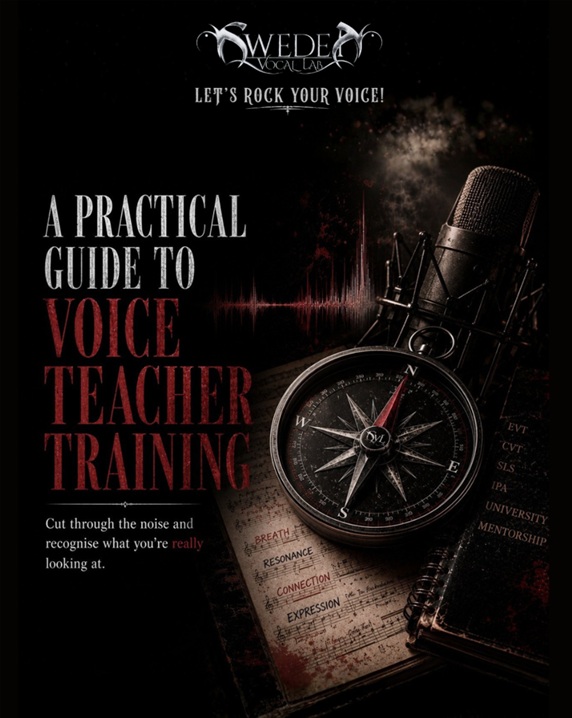
I created this guide to help you cut through the noise, understand the different types of training available and make your choice with greater clarity and confidence.
Start Here: A Simple Exercise That Will Save You Hours
The first thing to keep in mind is this:
Every year, new approaches appear claiming to offer innovative or revolutionary ways of understanding the voice.
In reality, the scientific foundations of voice production don’t change nearly as quickly. More often than not, what changes is the terminology, the way concepts are explained or the way existing ideas are organised.
Before you spend hours comparing websites, watching promotional videos and reading course descriptions, I recommend doing one simple exercise.
For the moment, forget about finding the best course.
Your first goal is simply to identify what type of course you’re looking at.
Read through the categories below and try to place every programme you’re considering into one of them. Once you start doing this, you’ll notice that many courses which initially seemed completely different are actually variations of the same educational approach.
This simple exercise removes much of the background noise and makes it much easier to create a meaningful shortlist.
If a course doesn’t provide enough information for you to understand which category it belongs to, I’d already consider that a significant red flag. Before investing your time and money, you should at least have a clear understanding of the type of education you’re being offered.
Once you’ve identified the category you’d like to start with, focus only on the courses that belong to that category. Comparing programmes designed for completely different purposes rarely leads to a meaningful decision.
Established Pedagogical Models (Frameworks) vs Teaching Methods
One of the most important distinctions to understand is the difference between a pedagogical model (or framework) and a teaching method.
These terms are often used interchangeably, but they describe fundamentally different things. Recognising the difference immediately divides the world of voice teacher training into two major categories and makes it much easier to understand what different courses are actually offering.
Pedagogical Models (Frameworks)
A pedagogical model, or framework, helps you understand and describe how the voice works. It provides a common language for analysing vocal function, but it doesn’t tell you how to teach it.
Estill Voice Training (EVT) is widely regarded as the reference pedagogical framework in modern voice training. It provides a precise system for understanding and intentionally controlling the structures involved in both spoken and sung voice. What you do with that knowledge, how you organise it into lessons, exercises or a teaching progression, is entirely up to you.
Teaching Methods
A teaching method combines an understanding of vocal function with a specific pedagogical philosophy, a defined teaching progression and characteristic exercises. It doesn’t simply explain how the voice works, but it proposes a particular way of teaching it.
Speech Level Singing (SLS) is a major example of a teaching method. Rather than simply providing a framework for understanding vocal function, it offers its own structured pedagogical approach and a specific pathway for developing singers.
Frameworks with an Integrated Teaching Method
Some systems sit between these two categories.
Complete Vocal Technique (CVT) combines the characteristics of both. Like a pedagogical framework, it provides a detailed system for describing and analysing vocal function. At the same time, it also includes its own teaching philosophy, pedagogical principles and practical approach, making it both a framework for understanding the voice and a method for teaching it.
Most of the countless approaches you’ll encounter don’t come from nowhere. They usually build upon one or more of these established foundations. The terminology may change, different ideas may be combined and individual teachers often adapt programmes to reflect their own experience and philosophy, but the underlying principles frequently trace back to these core systems.
Recognising those foundations allows you to look beyond the branding, cut through the marketing noise and understand what you’re really looking at.
One final point about terminology.
There is no universal vocabulary in vocal pedagogy. Different methods sometimes use the same word to describe different concepts, while other times they use different words to describe essentially the same thing.
Don’t become too attached to terminology. Always make sure you understand the underlying concept being discussed.
Structured Teacher Training Programmes
Rather than defining a new pedagogical model or teaching method, these programmes organise existing knowledge into a structured learning journey. Their goal is to help you build your first body of knowledge, develop a practical teaching toolkit and start teaching with a coherent framework instead of improvising everything from day one.
They may vary enormously in duration, group size and structure. You may learn how to structure lessons, sequence concepts, choose appropriate exercises, troubleshoot common situations and gradually build confidence as a teacher.
This is where I position my own teacher training. Rather than teaching a single method, my courses combine scientific foundations, critical thinking and practical teaching strategies to help vocal coaches become more confident, adaptable and independent.
When evaluating a programme, don’t focus only on its curriculum or marketing. Look at the pedagogical models, teaching methods and educational philosophy behind it.
A well-designed teacher training programme gives you enough knowledge and practical experience to start teaching with confidence instead of trying to piece everything together on your own. For this reason, if someone starting from scratch asked me where to begin, this would usually be my recommendation.
But this should be just the beginning of your education. Once you’ve built that initial foundation, I would recommend studying one or more established pedagogical frameworks in greater depth, while continuing to explore other approaches, compare different ideas and deepen your understanding of vocal pedagogy.
The “Everything for Everyone in No Time” Course
This is unfortunately one of the most common categories you’ll come across.
These courses claim to be suitable for everyone, from aspiring teachers to super experts. They usually cover an impressive number of topics in a short amount of time, making them look like incredible value.
The problem is that they rarely give you enough depth to truly understand any of those topics. Just when you feel you’re about to reach the really useful part, the explanation stops and you’re encouraged to take another one of their courses, another workshop or another masterclass. The pattern keeps repeating, creating the feeling that the real answer is always waiting somewhere else.
Unlike courses that teach scientific reasoning, which leave you with new questions because they’ve fundamentally changed the way you think, these courses leave you with basically the same questions you had before you started.
Unfortunately, these types of classes are very difficult to recognise beforehand. Sometimes you realise it only towards the end of the course, but many participants never realise it at all. Even more unfortunately for their unsuspecting students, there are countless voice teachers teaching today after completing little more than one of these weekend courses. They genuinely believe they’re fully prepared to teach because they simply don’t yet have the knowledge to recognise the enormous gaps in their own education.
If you’ve taken one of these courses as your very first introduction to vocal pedagogy, at least it will have shown you the topics you need to learn and the gaps you didn’t even know you had.
At that point, you’ll probably be tempted to continue with the next course from the same trainers. Instead, I recommend looking for that knowledge elsewhere, from teachers, methods and educational programmes that don’t rely on this strategy.
Otherwise, you risk getting caught in a sort of knowledge pyramid scheme, where every course exists primarily to convince you that the next one contains the answers you’ve been looking for.
To be clear, I’m not referring to structured teacher training programmes or established methods that are intentionally organised into multiple levels. Those programmes clearly explain from the outset how the training is structured, and each level provides substantial value on its own while preparing you for the next one.
The courses I’m referring to, on the other hand, present themselves as complete solutions for virtually anyone, but most topics are covered so superficially that they amount to little more than polished headlines rather than real explanations.
The difference is like buying the first volume of a well-designed series of textbooks versus buying a brochure disguised as a complete manual… and at the price of a complete manual!
Mentorship and Apprenticeship
Learning directly from an experienced teacher can accelerate your development in ways that are difficult to achieve through books or lectures alone.
Watching how an expert vocal coach analyses a student, changes direction during a lesson and adapts their decisions in real time provides valuable insights that are almost impossible to teach theoretically.
For that reason, I recommend mentorship after you’ve already developed a solid understanding of vocal pedagogy.
Without that foundation, there’s a greater risk of accepting everything your mentor says as absolute truth. A mentor should help you develop your own judgement, not replace it.
University and Conservatory Programmes
Of course the programmes differ from one institution to another, but one aspect I would pay particular attention to is how much importance the curriculum gives to understanding the voice itself.
In some countries, voice teacher education still places much greater emphasis on musicianship than on anatomy, physiology and the science of voice production.
Musicianship is an essential part of becoming a good vocal coach, but it cannot replace a thorough understanding of how the instrument actually works.
If you choose an academic path, evaluate this balance objectively. If scientific vocal pedagogy receives limited attention, I would strongly recommend complementing your education with specialised external training.
Final Thoughts
There isn’t a single perfect learning path. Different teachers build their education in different ways, combining methods, frameworks, mentoring, university study and practical experience.
Ultimately, the goal isn’t to memorise more exercises or collect more certificates, but to develop the ability to understand why you’re making certain teaching decisions.
Over time, that allows you to analyse new situations independently rather than relying on fixed recipes or rigid protocols.
Introduktion
I de tidigare artiklarna har vi utforskat varför det är viktigt att studera röstpedagogik och hur man utvärderar en utbildning för röstpedagoger. Nästa naturliga fråga är: vilken typ av utbildning ska du egentligen välja?
Det enorma utbudet av metoder, certifieringar och utbildningsprogram som finns idag kan kännas genuint överväldigande.
Jag skapade den här guiden för att hjälpa dig att sålla bort bruset, förstå vilka olika typer av utbildningar som finns och göra ditt val med större tydlighet och säkerhet.
Börja här: En enkel övning som sparar dig många timmar
Det första du bör ha i åtanke är följande:
Varje år dyker nya arbetssätt upp som påstår sig erbjuda innovativa eller revolutionerande sätt att förstå rösten.
I verkligheten förändras inte de vetenskapliga grunderna för röstproduktion särskilt snabbt. Oftast är det terminologin, sättet att förklara olika begrepp eller sättet att organisera befintliga idéer som förändras.
Innan du lägger timmar på att jämföra webbplatser, titta på reklamvideor och läsa kursbeskrivningar rekommenderar jag att du gör en enkel övning.
Glöm för en stund att hitta den bästa utbildningen.
Ditt första mål är helt enkelt att identifiera vilken typ av utbildning du tittar på.
Läs igenom kategorierna nedan och försök placera varje utbildning du överväger i någon av dem. När du börjar göra detta kommer du att märka att många utbildningar som först verkade helt olika egentligen är variationer av samma pedagogiska upplägg.
Den här enkla övningen tar bort mycket av bakgrundsbruset och gör det betydligt lättare att skapa en genomtänkt lista över relevanta alternativ.
Om en utbildning inte ger tillräckligt med information för att du ska kunna förstå vilken kategori den tillhör skulle jag redan betrakta det som en tydlig varningssignal. Innan du investerar tid och pengar bör du åtminstone ha en klar bild av vilken typ av utbildning du erbjuds.
När du väl har identifierat vilken kategori du vill börja med, fokusera enbart på de utbildningar som tillhör den kategorin. Att jämföra program som är utformade för helt olika syften leder sällan till ett meningsfullt beslut.
Etablerade pedagogiska modeller (ramverk) och undervisningsmetoder
En av de viktigaste skillnaderna att förstå är skillnaden mellan en pedagogisk modell (eller ett ramverk) och en undervisningsmetod.
Dessa begrepp används ofta som om de betydde samma sak, men de beskriver fundamentalt olika saker. Att förstå skillnaden delar omedelbart in röstpedagogiska utbildningar i två huvudkategorier och gör det mycket lättare att förstå vad olika utbildningar faktiskt erbjuder.
Pedagogiska modeller (ramverk)
En pedagogisk modell, eller ett ramverk, hjälper dig att förstå och beskriva hur rösten fungerar. Den ger ett gemensamt språk för att analysera röstfunktion, men den talar inte om hur du ska undervisa.
Estill Voice Training (EVT) betraktas allmänt som det ledande pedagogiska ramverket inom modern röstträning. Det erbjuder ett precist system för att förstå och medvetet kontrollera de strukturer som används både i tal och sång. Vad du gör med den kunskapen, hur du organiserar den i lektioner, övningar eller en pedagogisk progression, är helt upp till dig.
Undervisningsmetoder
En undervisningsmetod kombinerar en förståelse för röstfunktion med en specifik pedagogisk filosofi, en definierad undervisningsprogression och karakteristiska övningar. Den förklarar inte bara hur rösten fungerar, utan föreslår ett särskilt sätt att undervisa.
Speech Level Singing (SLS) är ett framträdande exempel på en undervisningsmetod. I stället för att enbart erbjuda ett ramverk för att förstå röstfunktion erbjuder den ett eget strukturerat pedagogiskt arbetssätt och en specifik utvecklingsväg för sångare.
Ramverk med en integrerad undervisningsmetod
Vissa system befinner sig mellan dessa två kategorier.
Complete Vocal Technique (CVT) kombinerar egenskaper från båda. Precis som ett pedagogiskt ramverk erbjuder det ett detaljerat system för att beskriva och analysera röstfunktion. Samtidigt innehåller det en egen undervisningsfilosofi, pedagogiska principer och ett praktiskt arbetssätt, vilket gör det både till ett ramverk för att förstå rösten och en metod för att undervisa.
De flesta av de otaliga arbetssätt du kommer att stöta på uppstår inte ur tomma intet. De bygger vanligtvis vidare på en eller flera av dessa etablerade grunder. Terminologin kan förändras, olika idéer kan kombineras och enskilda lärare anpassar ofta sina utbildningar efter sin egen erfarenhet och filosofi, men de underliggande principerna går ofta att spåra tillbaka till dessa centrala system.
Att känna igen dessa grunder gör det möjligt att se bortom varumärket, sålla bort marknadsföringsbruset och förstå vad du faktiskt tittar på.
En sista kommentar om terminologi.
Det finns inget universellt språk inom röstpedagogik. Olika metoder använder ibland samma ord för att beskriva olika begrepp, medan de andra gånger använder olika ord för att beskriva i stort sett samma sak.
Lås dig inte vid terminologin. Se alltid till att du förstår det bakomliggande konceptet.
Strukturerade utbildningsprogram för röstpedagoger
I stället för att definiera en ny pedagogisk modell eller undervisningsmetod organiserar dessa utbildningar befintlig kunskap i en strukturerad lärprocess. Deras mål är att hjälpa dig bygga upp din första kunskapsbas, utveckla en praktisk verktygslåda för undervisning och börja undervisa utifrån ett sammanhängande ramverk i stället för att improvisera allt från första dagen.
De kan variera enormt när det gäller längd, gruppstorlek och upplägg. Du kan få lära dig hur man strukturerar lektioner, bygger upp en pedagogisk progression, väljer lämpliga övningar, hanterar vanliga situationer och gradvis bygger upp självförtroende som lärare.
Det är här jag placerar min egen lärarutbildning. I stället för att undervisa i en enda metod kombinerar mina utbildningar vetenskapliga grunder, kritiskt tänkande och praktiska undervisningsstrategier för att hjälpa röstcoacher att bli tryggare, mer flexibla och mer självständiga.
När du utvärderar en utbildning bör du inte bara fokusera på kursplanen eller marknadsföringen. Titta på de pedagogiska modellerna, undervisningsmetoderna och den pedagogiska filosofi som ligger bakom den.
Ett väl utformat utbildningsprogram för röstpedagoger ger dig tillräckligt med kunskap och praktisk erfarenhet för att börja undervisa med självförtroende i stället för att försöka sätta ihop allting på egen hand. Av den anledningen skulle detta vanligtvis vara min rekommendation om någon som började helt från början frågade mig var de borde börja.
Men detta bör bara vara början på din utbildning. När du väl har byggt upp den första grunden skulle jag rekommendera att du fördjupar dig i ett eller flera etablerade pedagogiska ramverk, samtidigt som du fortsätter att utforska andra arbetssätt, jämföra olika idéer och fördjupa din förståelse av röstpedagogik.
Kursen som lovar allt till alla – på nolltid
Det här är tyvärr en av de vanligaste kategorierna du kommer att stöta på.
Dessa kurser påstår sig passa alla, oavsett om du är total nybörjare eller expert. De täcker vanligtvis ett imponerande antal ämnen på mycket kort tid, vilket får dem att framstå som ett fantastiskt erbjudande.
Problemet är att de sällan ger dig tillräckligt djup för att du verkligen ska förstå något av dessa ämnen. Precis när du känner att du är på väg att komma till den riktigt användbara delen tar förklaringen slut, och du uppmuntras att gå ännu en av deras kurser, ännu en workshop eller ännu en masterclass. Mönstret upprepar sig gång på gång och skapar känslan av att det riktiga svaret alltid finns någon annanstans.
Till skillnad från kurser som lär ut vetenskapligt resonemang, och därför lämnar dig med nya frågor eftersom de faktiskt har förändrat ditt sätt att tänka, lämnar de här kurserna dig i stort sett med samma frågor som du hade innan du började.
Tyvärr är den här typen av kurser mycket svåra att känna igen i förväg. Ibland inser man först mot slutet av kursen vad som egentligen pågår. Många deltagare inser det tyvärr aldrig. Ännu mer beklagligt är det för deras intet ont anande elever. Det finns otaliga röstpedagoger som undervisar idag efter att ha genomgått föga mer än en sådan här helgkurs. De är genuint övertygade om att de är fullt förberedda för att undervisa, helt enkelt därför att de ännu inte har tillräckliga kunskaper för att inse hur stora luckorna i deras egen utbildning faktiskt är.
Om du har gått en sådan här kurs som din allra första introduktion till röstpedagogik har den åtminstone visat dig vilka områden du behöver lära dig mer om och vilka kunskapsluckor du inte ens visste att du hade.
Vid det laget kommer du förmodligen att frestas att fortsätta med nästa kurs från samma utbildare. Jag skulle i stället rekommendera att du söker den kunskapen någon annanstans – hos andra lärare, metoder och utbildningsprogram som inte bygger på den här strategin.
Annars riskerar du att hamna i ett slags pyramidspel med kunskap, där varje kurs framför allt finns till för att övertyga dig om att nästa kurs innehåller svaren du letar efter.
För att vara tydlig syftar jag inte på strukturerade utbildningsprogram eller etablerade metoder som medvetet är uppbyggda i flera nivåer. De utbildningarna förklarar redan från början hur utbildningen är upplagd, och varje nivå ger ett betydande värde i sig samtidigt som den förbereder dig för nästa.
De kurser jag syftar på presenterar sig däremot som kompletta lösningar för i princip vem som helst, men de flesta ämnen behandlas så ytligt att de blir föga mer än välformulerade rubriker snarare än verkliga förklaringar.
Skillnaden kan liknas vid att köpa den första delen i en väl genomtänkt serie läroböcker jämfört med att köpa en broschyr förklädd till en komplett handbok... till priset av en komplett handbok.
Mentorskap och lärlingskap
Att lära sig direkt av en erfaren lärare kan påskynda din utveckling på ett sätt som är svårt att uppnå enbart genom böcker eller föreläsningar.
Att se hur en erfaren röstcoach analyserar en elev, ändrar riktning under en lektion och anpassar sina beslut i realtid ger värdefulla insikter som är näst intill omöjliga att lära ut enbart teoretiskt.
Därför rekommenderar jag mentorskap först när du redan har byggt upp en stabil förståelse för röstpedagogik.
Utan den grunden finns en större risk att du accepterar allt din mentor säger som absoluta sanningar. En mentor ska hjälpa dig att utveckla ditt eget omdöme – inte ersätta det.
Universitets- och musikhögskoleutbildningar
Det här är förmodligen den svåraste kategorin att generalisera, eftersom utbildningarna varierar enormt mellan olika lärosäten.
En aspekt jag skulle ägna särskild uppmärksamhet åt är hur stor vikt utbildningen lägger vid förståelsen av själva rösten.
I vissa länder lägger utbildningar för röstpedagoger fortfarande betydligt större vikt vid musikalitet än vid anatomi, fysiologi och vetenskapen bakom röstproduktion.
Musikalitet är en grundläggande del av att bli en skicklig röstcoach, men den kan inte ersätta en djup förståelse för hur instrumentet faktiskt fungerar.
Om du väljer en akademisk utbildning bör du utvärdera den balansen objektivt. Om vetenskaplig röstpedagogik får begränsat utrymme skulle jag starkt rekommendera att komplettera utbildningen med specialiserad extern fortbildning.
Avslutande tankar
Det finns ingen enda perfekt utbildningsväg. Olika lärare bygger sin kompetens på olika sätt genom att kombinera metoder, pedagogiska ramverk, mentorskap, universitetsstudier och praktisk erfarenhet.
Det slutliga målet är inte att memorera fler övningar eller samla fler certifikat, utan att utveckla förmågan att förstå varför du fattar vissa pedagogiska beslut.
Med tiden gör det att du kan analysera nya situationer självständigt i stället för att förlita dig på färdiga lösningar eller rigida metoder.
Relaterade artiklar
För att komplettera den här guiden kan du även ha nytta av följande artiklar: